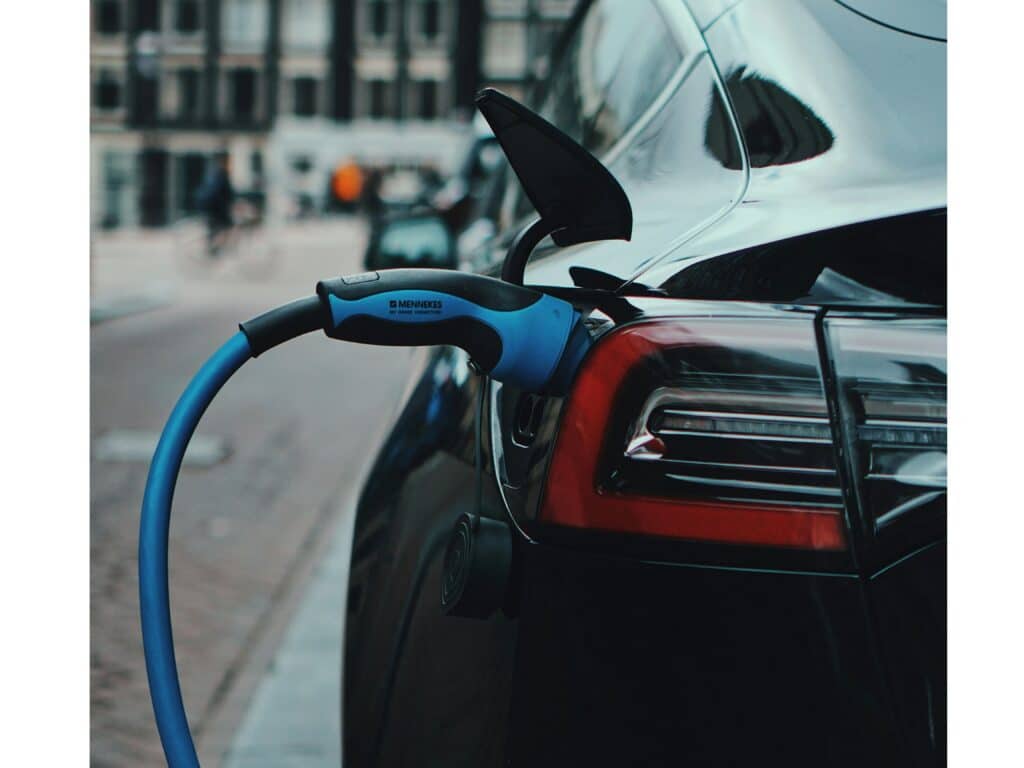
An off-grid solar company founder and lifelong camper set out to solve the biggest weakness in towing with an electric vehicle: lost range. He wanted a travel trailer that could run independently in the backcountry and, just as importantly, recharge the electric truck pulling it. A 20.48kWh Victron-based power system engineered and designed for the build turned the trailer into a rolling charging station, one capable of feeding both a camper’s daily loads and a Tesla Wall Connector wired straight to its inverter/chargers.
Electric vehicles and off-grid travel trailers rarely mix well. Towing behind an EV creates significant aerodynamic drag, and that drag, more than trailer weight, is what cuts into range the most. For an off-grid enthusiast planning long stretches without services, that range hit compounds a second problem: there is no EV charging infrastructure in the backcountry. A dead battery at a remote trailhead or a multi-day event means either a very long tow to the nearest charger or waiting out a slow public charging session that costs both time and money.
The owner had already built one Victron-based camper and wanted to take the concept further: a trailer that did not just sustain itself off-grid, but actively extended his vehicle’s range while parked. A standard RV power system, built to run lights, a water pump, and a refrigerator, was never going to cut it. He needed enough battery capacity, solar input, and inverter output to safely deliver Level 2, 240-volt charging to an electric vehicle, all while keeping the trailer light and aerodynamic enough not to work against the very range it was designed to protect.
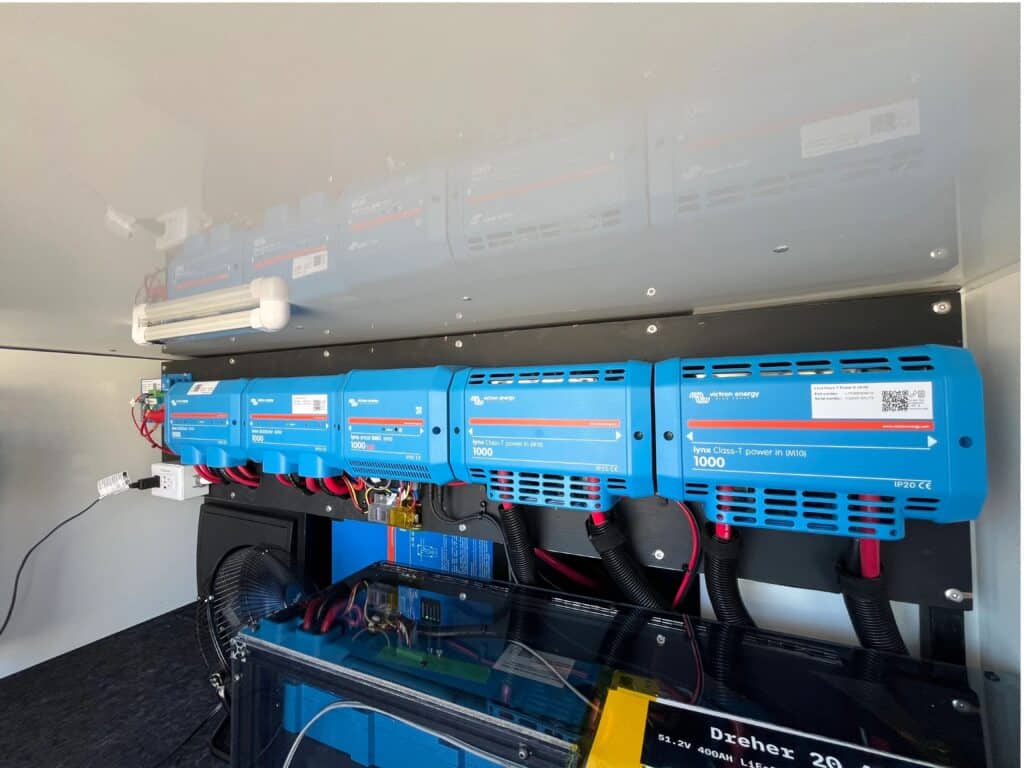
The system starts with a 20.48kWh battery bank built from four Victron Lithium NG Batteries (LiFePO4), wired through dual Lynx Power In Class-T combiners. A Victron Lynx BMS NG 1000 balances and protects the bank, tracking every fuse and pulling in cell-level data. The BMS also doubles as a main disconnect for shutting the system down.
That output moves through two Victron MultiPlus-II 48/3000 Inverter/Chargers, wired in a split-phase configuration to produce a true 240-volt output. This is what makes it possible to power a Tesla Gen 3 Wall Connector directly from the trailer, alongside the camper’s own 120-volt AC outlets. The same inverter/chargers also connect to a 50-amp shore power inlet, so the trailer charges from an RV park with the same wiring it uses to charge the vehicle. The camper’s 12-volt DC circuits, lighting, water pump, and fans run independently off the battery bank through a pair of Victron Orion 48/12V DC-DC Converters wired in parallel.
Solar input comes from three Victron SmartSolar MPPT charge controllers, sized for three separate arrays: a 1,350-watt fixed array on the roof, plus two portable 960-watt and 880-watt suitcase-style arrays that deploy on the ground when parked. Splitting the arrays across dedicated MPPTs lets each one run at its own voltage and panel orientation without dragging down the others, so the system keeps charging even if the trailer is parked in partial shade or angled away from the sun.
A Victron Cerbo GX and GX Touch 50 tie the entire system together, giving full visibility into battery state, charge sources, and fuse status from one screen, with remote access from anywhere with a cell connection. On the second owner’s rig, that same Cerbo GX also runs a relay-controlled heat pad system to keep the batteries above freezing so they can safely accept a charge in cold weather. A change made after the trailer changed hands but built on the same monitoring backbone. That flexibility is the real story: a single wiring platform capable of running a full-size camper, warming its own batteries, or feeding a highway-capable EV charger, all from a compartment barely larger than a suitcase.

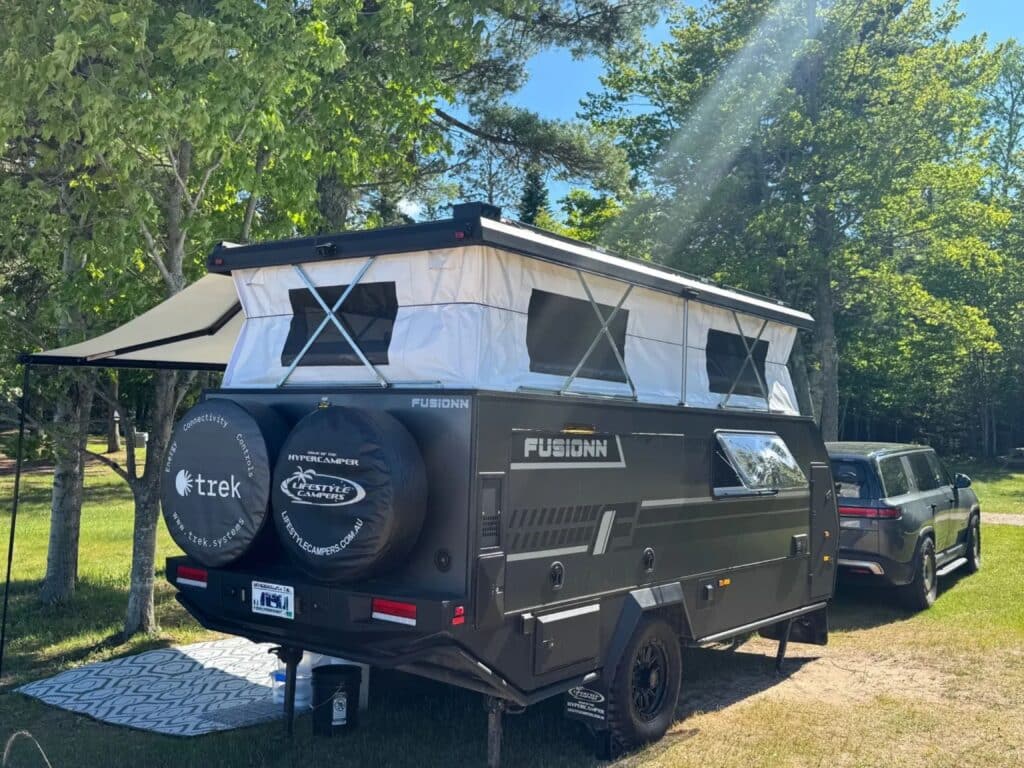
Parked for a multi-day stay, such as a week at Burning Man, the trailer’s solar array and battery bank can put roughly 150 miles of range back into the towing vehicle before it is time to drive out, turning what would be a one-way trip into a round trip without a public charging stop. Split-phase output from the dual inverters delivers that charge at Level 2 speed, closer to 20 miles of range per hour, rather than the trickle a standard household outlet would provide. The system has now run reliably for more than a year, carrying over cleanly to a second owner and a different EV platform, a result Victron featured on its own blog as a standout example of solar-powered EV charging on the road.
Beyond the charging story, the trailer covers its own daily loads under typical camping conditions, running lighting, refrigeration, water systems, and cooking without depleting the bank. That reliability is what let the second owner focus his attention on refining the system further, upgrading the BMS and building in battery heating, rather than solving basic power problems. The result is a travel trailer that functions as a genuine off-grid power plant, one confident enough in its own capacity to share that power with the vehicle towing it.
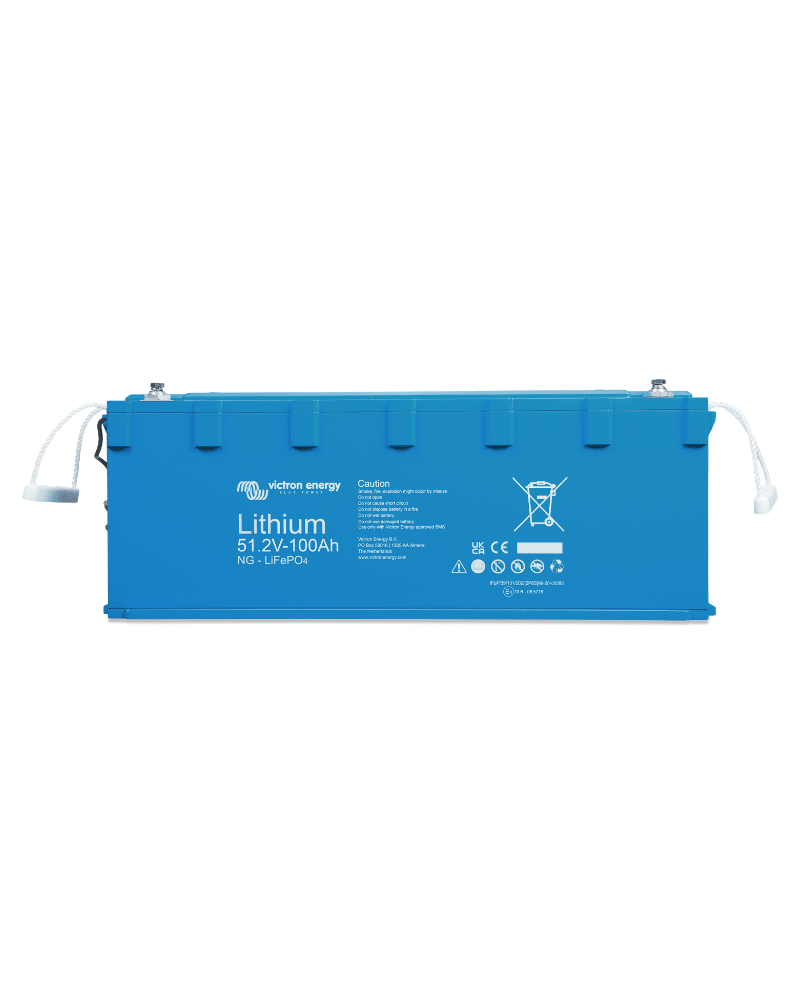
Four 51.2V/100Ah units form the trailer’s 20.48kWh bank, delivering enough stored capacity to run the camper off-grid and still hold power in reserve to send to the EV.
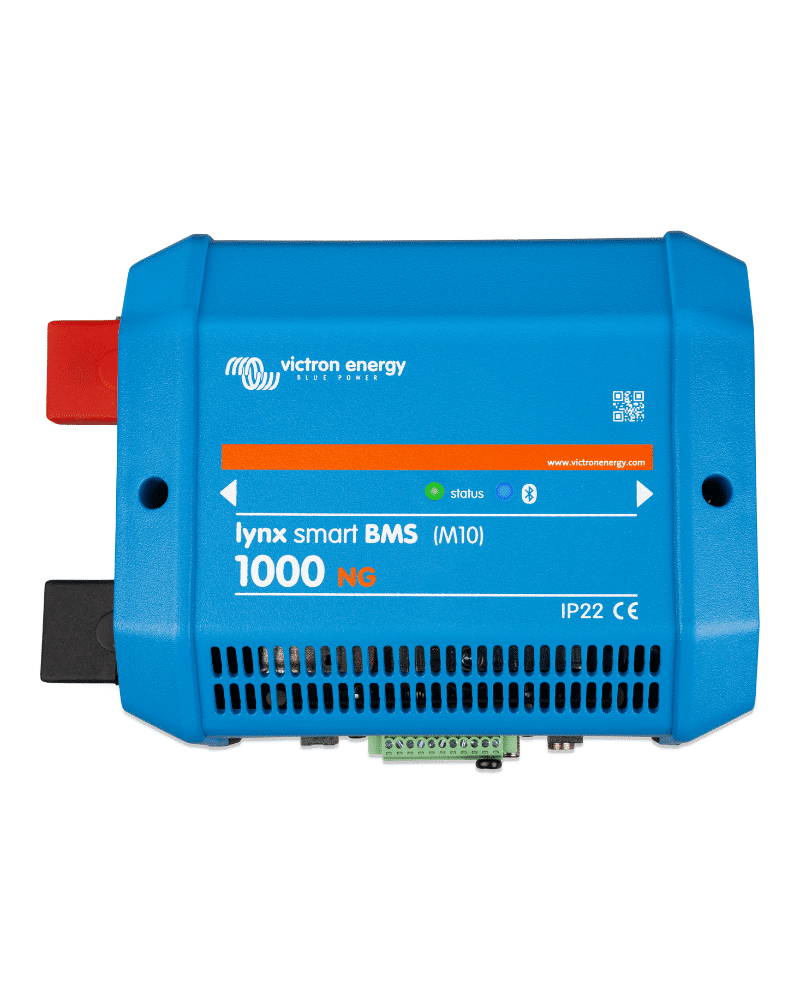
Monitors the battery bank cell by cell and protects it from over-current, over-temperature, and fuse failure, feeding that data straight into the Cerbo GX for remote visibility.
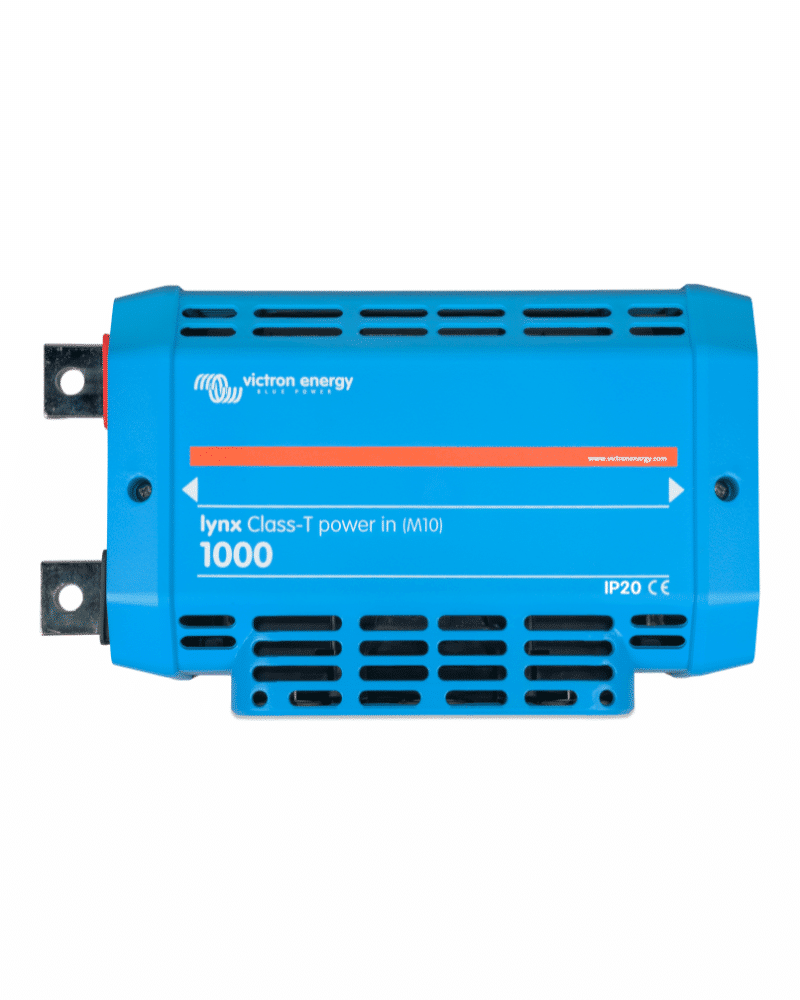
Dual combiners connect the bank to the distribution bus. A large lithium bank can produce fault currents beyond what a standard fuse can safely interrupt, so Class T fuses, rated up to 20,000A, guard against a catastrophic short.
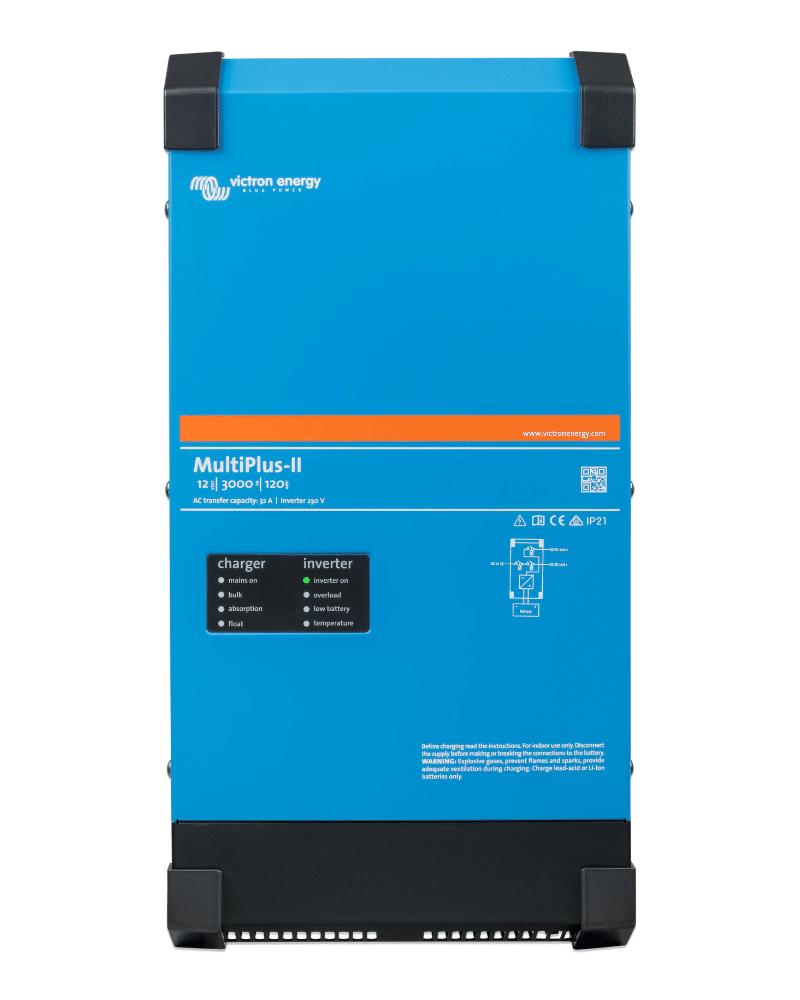
Two units wired split-phase produce the 240-volt output needed to run the Tesla Wall Connector at full Level 2 speed, while also carrying the camper’s 120-volt loads and 50-amp shore power connection.
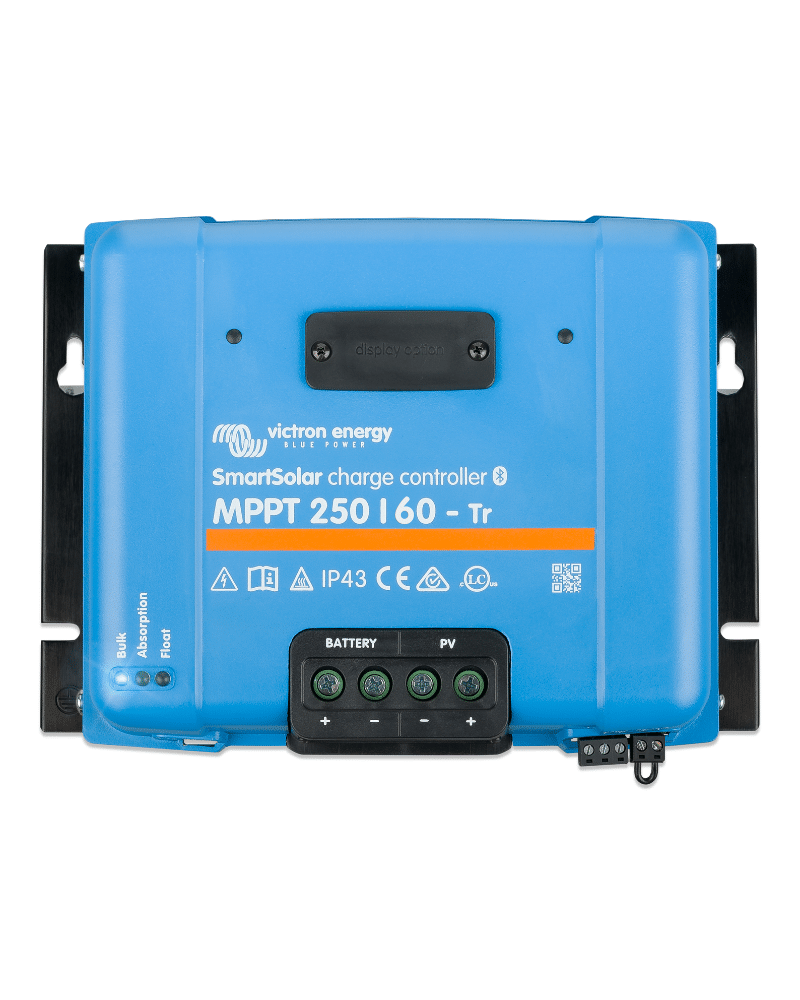
Three controllers (150/35, 250/60, and 150/45 models) each manage a separate array, a 1,350-watt fixed roof array plus two portable 960-watt and 880-watt suitcase arrays, so shading or angle on one array never limits the others.
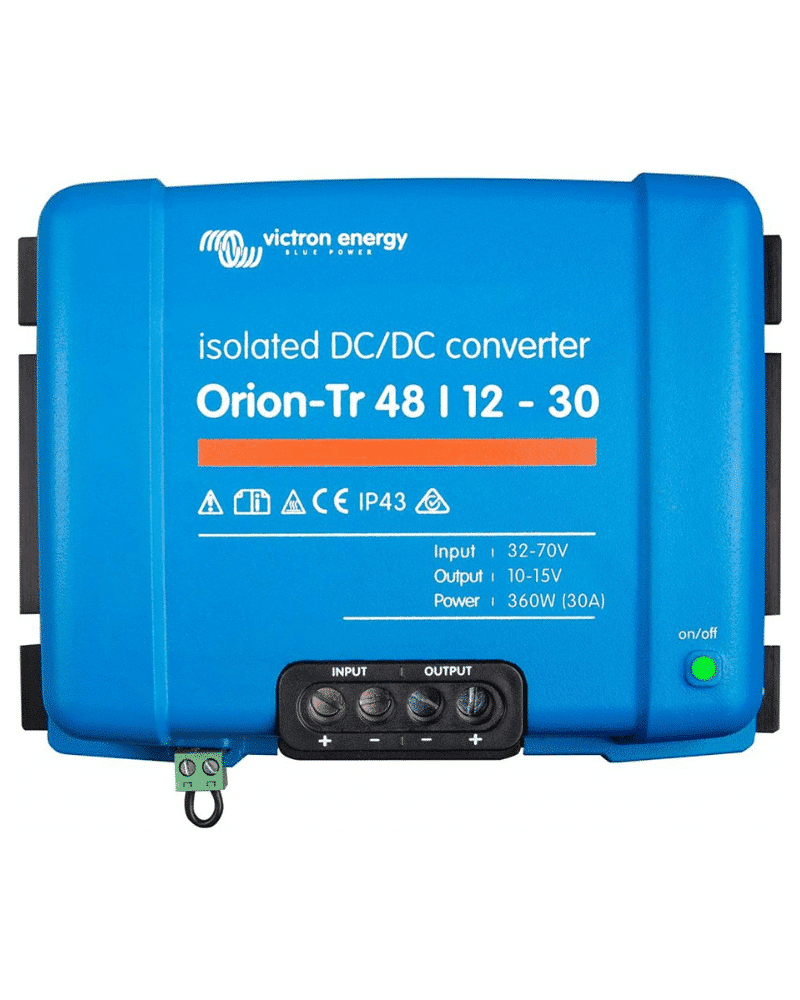
Two converters run in parallel, stepping the 48-volt bank down to power the camper’s 12-volt lighting, water pump, and vent fan circuits independently of the inverters.

Provides on-screen and remote monitoring of the battery, inverters, and solar arrays, and runs the relay-controlled heat pad system that keeps the batteries safe to charge in cold weather.

Switched on through a Cerbo GX relay to keep the battery bank above freezing in cold weather so it can safely accept a charge from solar or shore power.
Presented by Trek Systems.