Across Denver’s front range, food trucks have long run on gas generators, and with them came noise, fumes, fuel costs, and regular maintenance eating into margins for small business owners. The Regional Air Quality Council built its Engines Off grant to change that, helping food trucks and other mobile businesses trade those generators for battery power. Trek Systems has been a technical partner in the program from the start, designing the systems, training the builders who install them, and working alongside the Council to make the grant genuinely accessible to the small businesses it serves.
The Regional Air Quality Council is a Colorado nonprofit established in the 1980s to address air pollution across the Denver front range and its nonattainment area. Its work spans a range of clean-air initiatives, and the Engines Off grant is one of them, targeting a source of emissions that is easy to overlook and difficult to reach: the mobile generator.

A nonattainment area is a region the EPA has designated as failing to meet federal air quality standards for a given pollutant. The Denver front range carries this designation for ground-level ozone, which forms when pollutants like those from gas generators react in sunlight.

Food trucks are a stubborn source of emissions. They are mobile, they run on average 250 to 300 days a year for six to eight hours a day, and for every one of those hours a gas generator is putting out volatile organic compounds, nitrogen oxides, and greenhouse gases. Because they are a mobile source operating in the Denver nonattainment area, they fit squarely within the air-quality mandate the program was built to serve.
The grant began as one person’s vision, rooted in the local food truck community, and grew from there. It covers up to 80 percent of project costs, capped at 20,000 dollars, which puts a full battery conversion within reach for operators who could never absorb that cost on their own. What started with food trucks has since opened up to other mobile businesses, dog groomers, mobile tire shops, and on-the-go mechanics among them, any operation that can retire a generator. The program has grown almost entirely by word of mouth, spreading through food truck rallies, local festivals, and operators talking to one another. That organic growth has been so strong that demand now regularly outpaces available funding. For the operators themselves, the benefit runs past clean air: many now market their clean, quiet power as a selling point, and the absence of a generator opens up event work, from weddings to private bookings, that noise and fumes once ruled out.
Since the program began, the Engines Off grant has delivered measurable results across the businesses it has supported:
Trek Systems has been involved with Engines Off since the Council first launched it, and that early partnership shaped how the program works on the ground today. The relationship goes well beyond supplying equipment. It covers the design, the training, and the logistics that turn an approved grant into a working, generator-free truck.
Much of that work happens with the builders. Trek hosts hands-on trainings every quarter, and several of the region’s food truck builders, US Food Trucks, Van Life Customs, and Artzer among them, have attended to learn how to design and install these Victron-based systems. For every build that goes through a partner shop, a complete wiring diagram is produced ahead of installation, so the system is wired exactly as designed. That support matters most for builders new to this equipment, who often start with questions and finish fully competent.
Not every operator works through a builder. Some want to build their truck themselves, and Trek supports them directly, running an energy audit to understand their real power needs, then designing and quoting a system sized to match. Whether the customer is a seasoned builder or a first-time owner, the goal is the same: a system that carries a full shift and holds up over years of daily use.
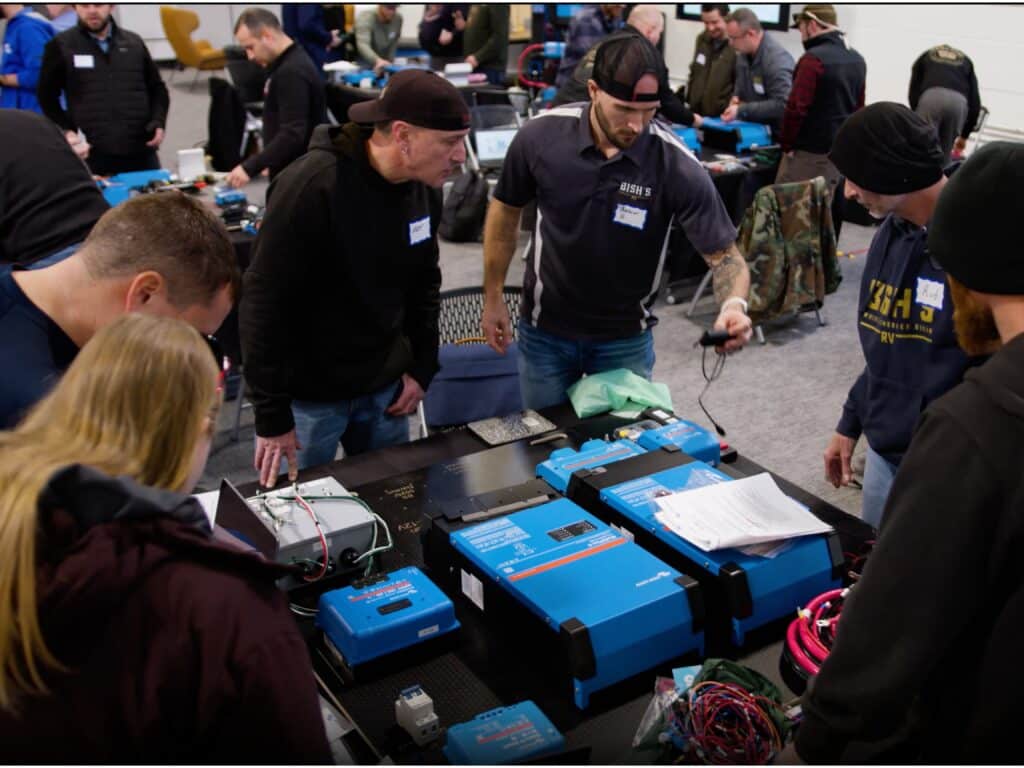
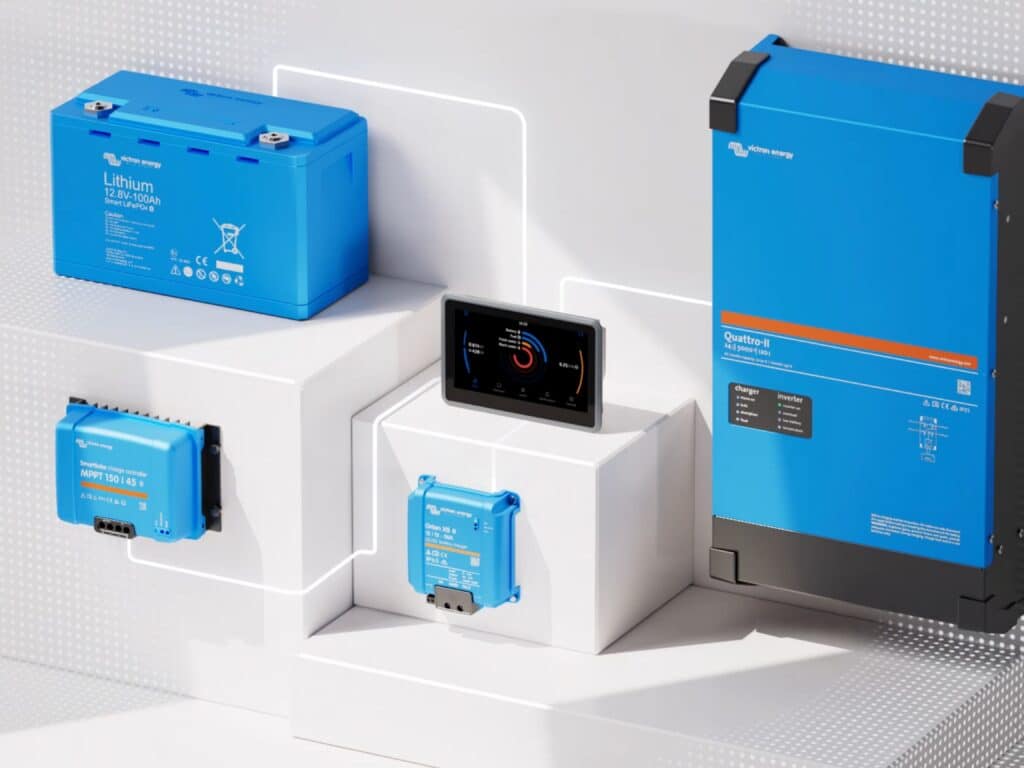
In addition to professional installers, key RAQC personnel have joined Trek’s two-day trainings to learn how these systems come together, what goes into sizing one correctly, and what a sound installation looks like. That knowledge helps the Council evaluate applications with a sharper eye and point applicants toward partners who can deliver.
Perhaps the most consequential contribution was financial. Grant reimbursements take 30 to 45 days, and in the early days operators had two options: wait out that window, or front 15,000 dollars or more themselves and wait to be paid back. Many did not have that kind of cash flow, and qualified applicants were walking away because the math did not work. Trek took the lead in solving it. Once a grant is approved and the operator pays their 20% match, Trek ships the full system upfront and collects reimbursement from the Council directly, weeks later, rather than leaving the business to carry the cost. That single change kept applicants from falling out of the program, and other suppliers eventually adopted the same approach.
The Engines Off grant is open to food trucks and other mobile businesses looking to replace a generator with battery power. Applications and current program details are available at enginesoff.org. Grant cycles open periodically, so it is worth checking the site for the next round.
A strong application starts with a clear picture of your power needs, and that is where the process begins with Trek as well. Before you apply, it helps to be ready to answer a few questions:
With those answers in hand, a system can be sized, quoted, and ready to submit with your grant application.

Tell us about your setup and we’ll help you size a system and prepare your grant quote.
Presented by Trek Systems, in partnership with the Regional Air Quality Council, Engines Off Grant. enginesoff.org